
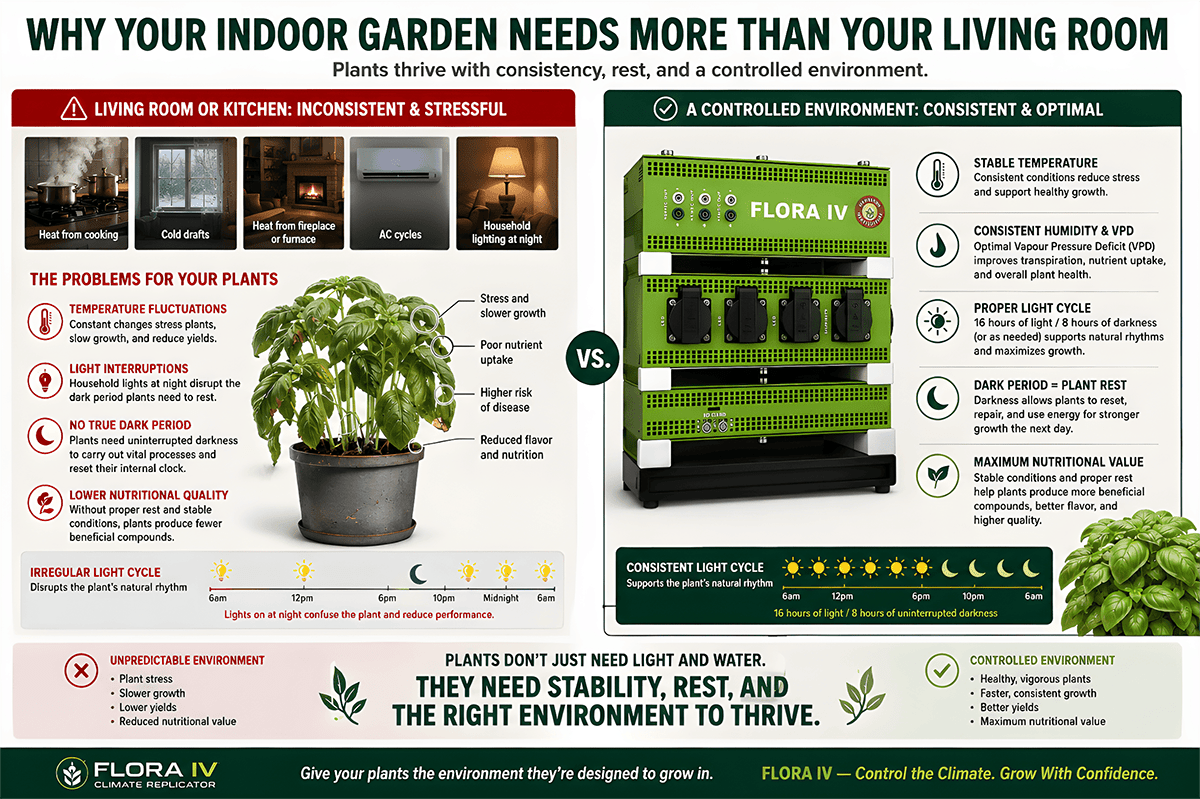
When diving into indoor gardening in canada, it is easy to assume that setting up a modern hydroponics system designed to look like furniture in your living room or kitchen is a great way to start growing. However, traditional living spaces are actually volatile, stressful zones that actively work against your plants' health.
The Hidden Stress of Living Rooms and Kitchens
According to environmental plant data, common household areas introduce severe, invisible hurdles that stunt growth:
- Inconsistent Temperatures: Kitchens and living rooms suffer from erratic heat sources like cooking appliances, fireplaces, and central furnaces, which are constantly interrupted by cold drafts and aggressive air conditioning cycles.
- Constant Plant Stress: These continuous temperature shifts cause severe plant stress, resulting in slower overall growth, poor nutrient uptake, and reduced final yields.
- Light Interruptions and No True Dark Period: Household lights left on at night and late-night television glare disrupt the critical dark periods plants need to rest. This irregular light cycle confuses their internal clock and ruins performance.
- Lower Nutritional Quality: Without proper rest and stable environmental conditions, plants fail to carry out vital internal processes, yielding fewer beneficial compounds, lower flavor, and reduced nutritional value alongside a higher risk of disease.
Choosing Stability for Success
If you want to achieve professional results when indoor gardening in canada, remember that plants don't just need light and water—they need stability, rest, and a controlled environment to truly thrive.
Instead of relying on chaotic common areas, successful cultivators when indoor gardening in canada look toward specialized automated systems—like the FLORA IV Climate Replicator—to lock in stable temperatures, optimal vapour pressure deficit (VPD), proper 16-hour light cycles, and uninterrupted 8-hour dark periods for maximum yields and nutritional potency.